
Capturing your artwork in its best light is a crucial step in presenting it to potential buyers. Here are guidelines to help you photograph your art effectively:
Arrangement
Set up your artwork against a neutral, light-colored background (preferably white) to prevent any color distortion in your photos.
Lighting
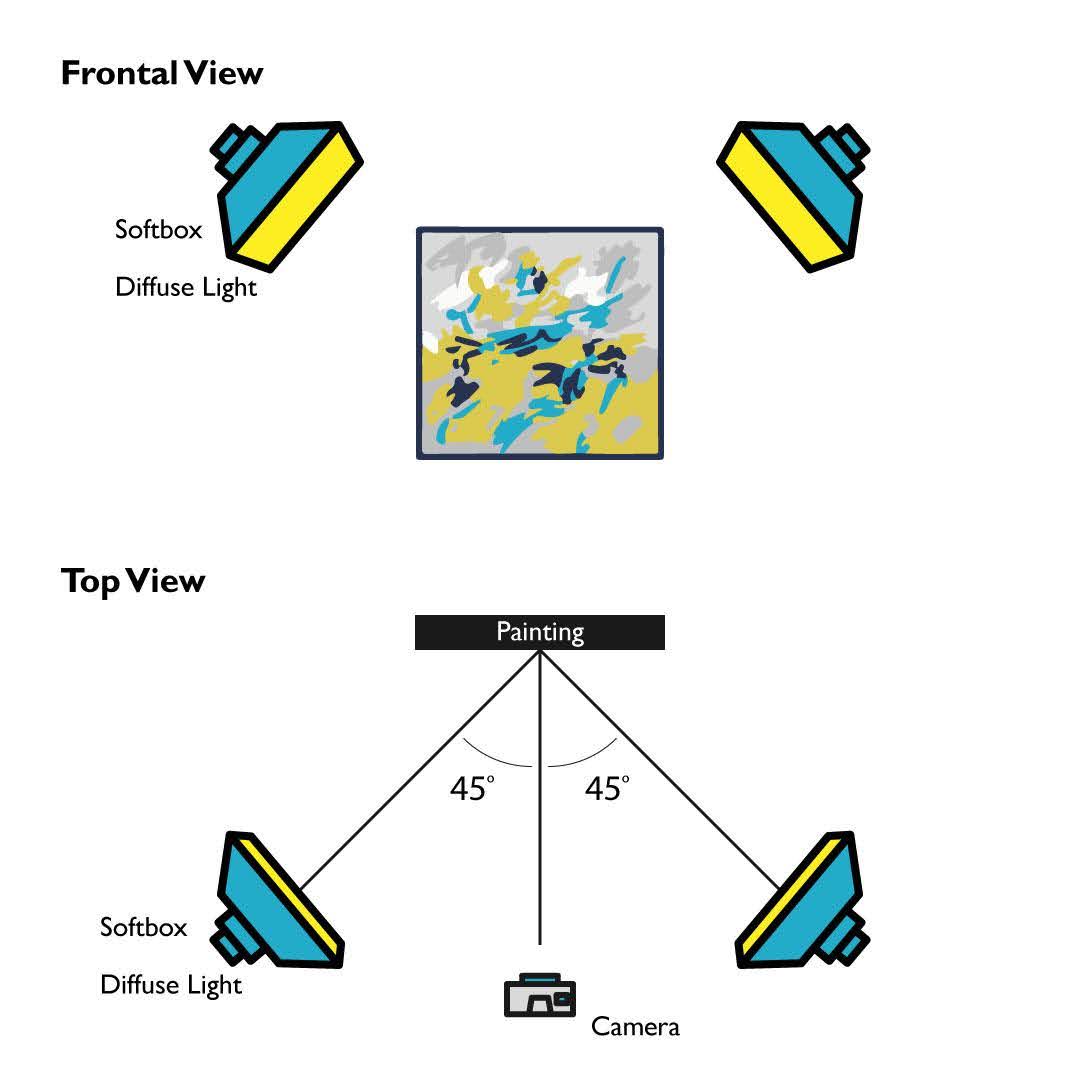
Utilize diffused or natural sunlight for the most flattering effects. Avoid direct sunlight, as it will be too harsh, soften it with a white fabric or curtain to eliminate glare and ensure even lighting. For indoor lighting, avoid using direct artificial lights or flash; instead, opt for multiple indirect light sources (like Softbox) or a reflector to achieve a balanced illumination.
Focus, Blur, and Placement
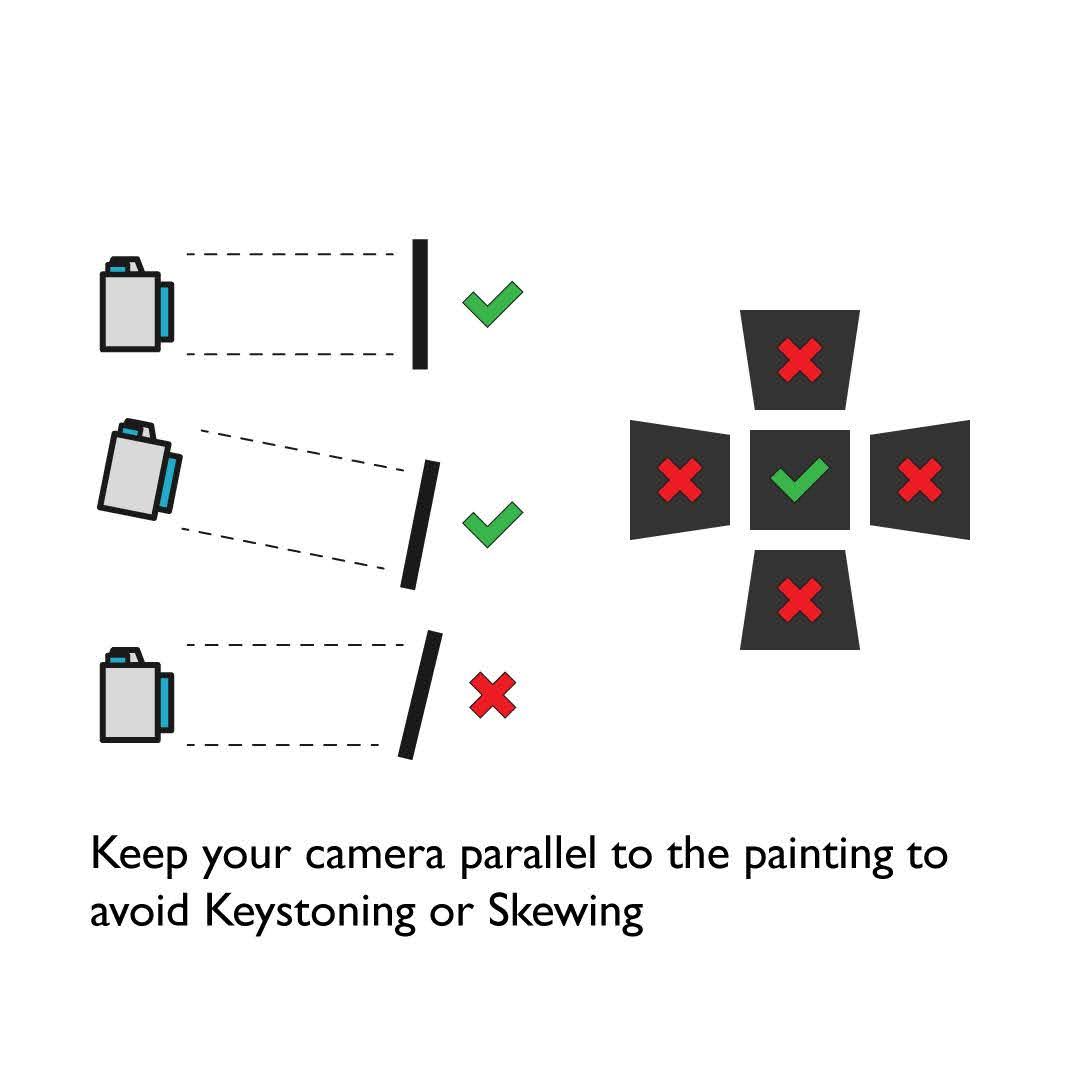
Ensure your camera is stable by using a tripod or a steady support surface to avoid any blur. Photograph your artwork at a 90-degree angle to maintain perspective and integrity. Always use the highest resolution possible to allow detailed viewing, enabling collectors to zoom in and appreciate the finer textures and elements of your piece.
Post-Processing/Editing
Keep editing to a minimum to ensure the photograph accurately represents the artwork. If necessary, only crop out the background to clean up the image. When photographing framed works, include the frame in your shot.
Technical Specifications for Your Image
- Save your image as a JPEG file in RGB color mode.
- Ensure the resolution is at least 1920 pixels by 1440 pixels.
- Keep the file size under 50MB for optimal quality and usability.